Tenerife is one of the most visited Canary Islands. Millions of tourists come here every year for the sun, ocean and views of Teide. Paradoxically, the more popular the destination, the more Tenerife’s history remains unknown. Tenerife has a second bottom – raw, mysterious and sometimes surprising.
Here are 5 unusual facts about Tenerife to help you get to know it better.
Tenerife was once divided into kingdoms that… knew no wheel
Before the Spaniards arrived on the island, Tenerife was inhabited by the Guanches, a people of Berber origin from North Africa. The most surprising thing is that in the 15th century Tenerife was divided into 9 independent kingdoms (menceyatos), which functioned without writing, without metal and… without the wheel.
The Guanches did not use the wheel not because they did not know it, but because the island’s geography made it useless. Steep slopes, ravines (barrancos) and rocky terrain meant that transportation relied on human and animal power. Despite this, the Guanches:
- formed complex social structures,
- They practiced embalming the dead (comparable to Egypt),
- conducted precise astronomical observations,
- were familiar with herbal medicine and surgery.
Moreover, the various kingdoms were at war with each other, and the Spanish conquest of the island took almost five years – longer than in the other Canary Islands.
👉 It is one of the few islands in Europe that developed outside Mediterranean civilization until the 15th century.
There are microclimates in Tenerife that can change the weather in 15 minutes
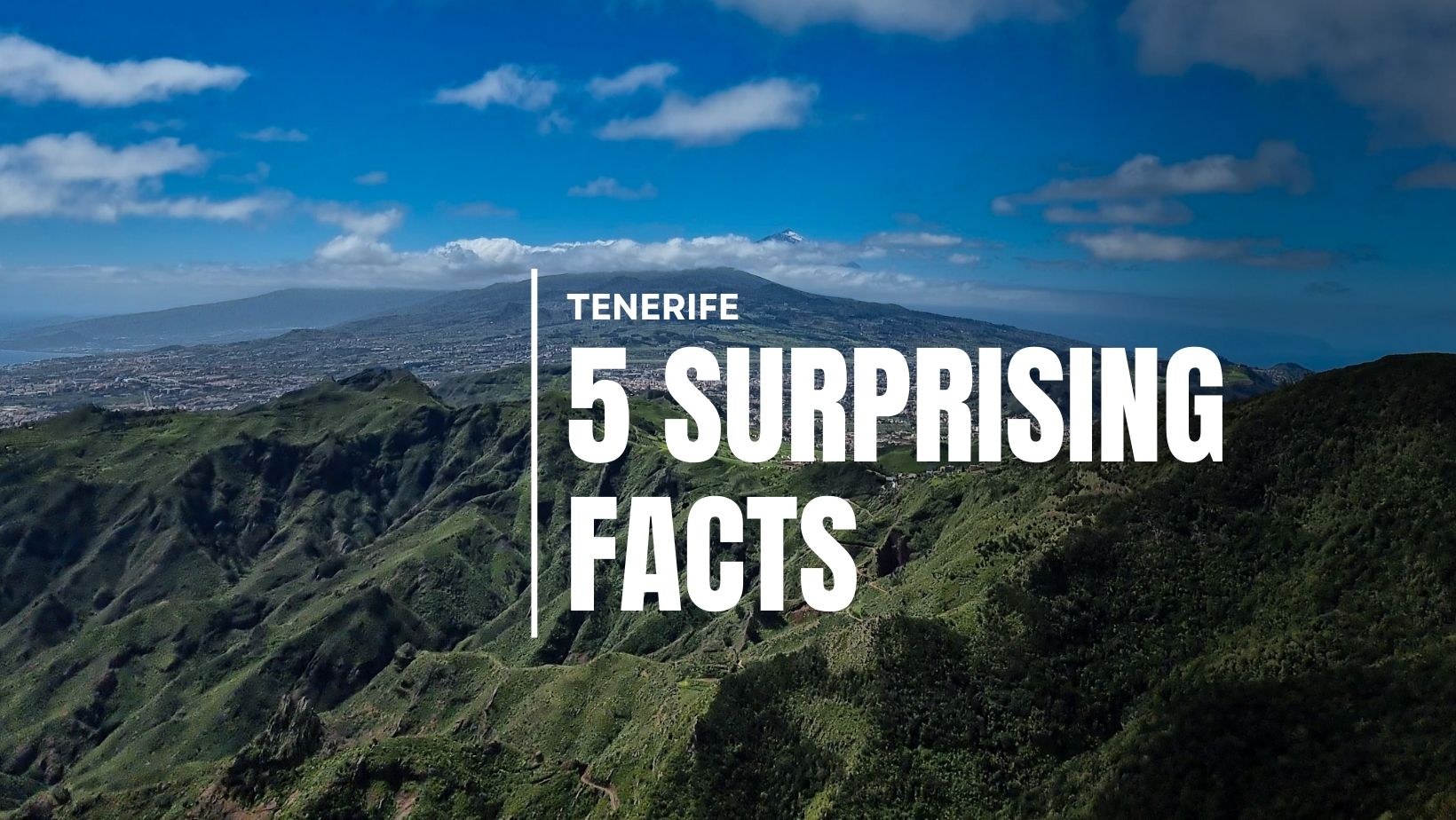
Most people know that the north of Tenerife is greener and the south is drier. But that’s just a simplification. In fact, Tenerife has one of the most complex networks of microclimates in the world for such a small area.
In one day you can:
- Sunbathe at 28°C in Los Cristianos,
- Drive through thick fog in La Laguna,
- Find yourself in the cold and wind at 2,200 meters above sea level,
- see a desert landscape reminiscent of Mars.
The effect:
- Atlantic-bound belts,
- Teide massif,
- steep differences in elevation (from 0 to 3718 m),
- “sea of clouds” (mar de nubes) phenomena.
For farmers, this means the opportunity to grow bananas, vines, potatoes and laurel trees on one island, and for tourists, it means unpredictable but fascinating weather.
Tenerife’s water was more precious than gold – and still affects the lives of residents today
One of the least known facts about Tenerife is that for centuries the island’s greatest wealth was not land or trade, but… water.
There are virtually no rivers in the south of Tenerife. To survive, the locals have created:
- Hundreds of kilometers of canals (acequias),
- Thousands of water tunnels cut by hand into the rocks,
- private water companies, whose shares are still inherited today.
Until the 20th century, tunneling workers died regularly – lack of oxygen, collapses and exhaustion were the norm. In some villages, water was currency, and some families made fortunes solely on its distribution.
Today, Tenerife benefits from seawater desalination, but the structure of the water’s properties still affects:
- real estate prices,
- urban development,
- political conflicts.
👉 This is one of the few European islands where the history of water has shaped society more than money.
Tenerife’s largest forests are living fossils millions of years old
Laurel forests (laurisilva) on Tenerife are remnants of prehistoric forests that covered southern Europe millions of years ago. When the continent’s climate cooled, they disappeared almost everywhere – surviving only on the islands of Macaronesia.
What makes them unique?
- They don’t need rain – they live by the moisture from the clouds,
- have not changed significantly since the Tertiary era,
- are home to species found nowhere else in the world.
Walking through the forests of Anaga, you are walking through an ecosystem older than the Alps. It’s not a landscape park in the classic sense – it’s a biological museum of the Earth. You can go to the Anaga mountains with us on guided tours 👉 check out the details: https://oletenerife.pl/produkt/skarby-polnocy-calodniowa-wycieczka-objazdowa/
👉 Tenerife was not only formed from the fire of volcanoes, but keeps alive the memory of ancient Europe.
Tenerife’s mentality is closer to Latin America than Europe
Although Tenerife administratively belongs to Spain, mentally it is often closer to Cuba, Venezuela or Colombia. Why?
From the 18th to the 20th century, tens of thousands of islanders emigrated to Latin America, fleeing poverty and drought. Many later returned with:
- A different approach to life,
- another language (Canary Spanish),
- another kitchen,
- different music and gestures.
Hence:
- Slower pace of life,
- The great importance of family relations,
- distance to paperwork,
- An aversion to haste and stress.
👉 Tenerife is a European island with the soul of Latin America, and you can feel it at every turn.
Tenerife is not just an island of beaches and hotels. It is a place:
- With a complicated history,
- extreme contrasts,
- unique nature,
- A deeply rooted culture of survival.
The longer you’re here, the more you understand that Tenerife doesn’t just want to be visited – it wants to be explored. You can explore it on your own or on our tours. Check out the offer of all attractions and optional tours in Tenerife 👉 https://oletenerife.pl/sklep/
Find us on social media!
👉Instagram: https://www.instagram.com/ole.tenerife/
👉Facebook: https://www.facebook.com/atrakcjenateneryfie